Product Overview
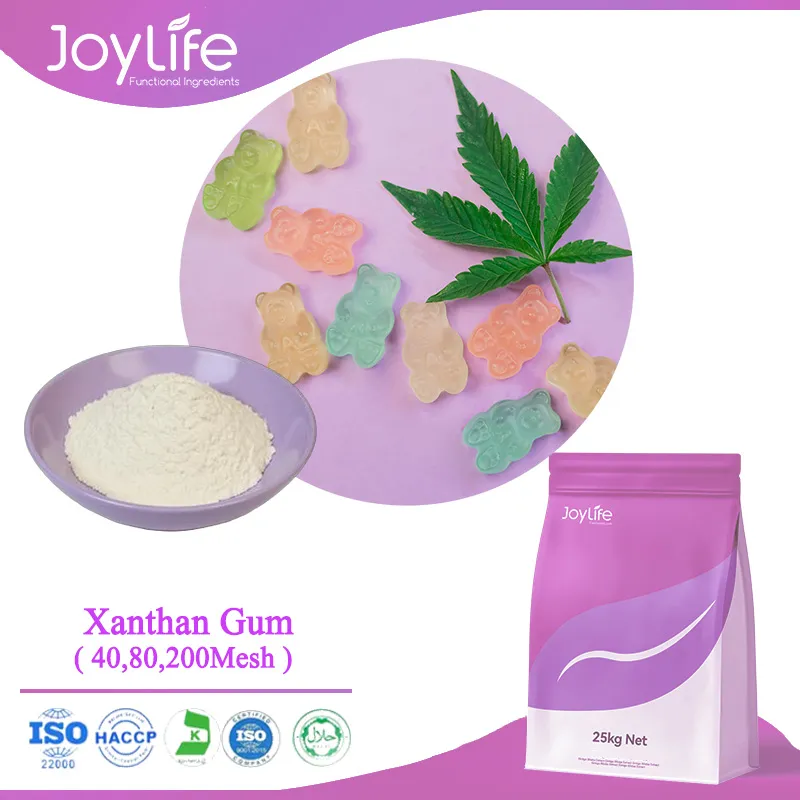
Xanthan gum is defined as an industrial biopolymer produced from the bacterium Xanthomonas campestris, characterized as a heteropolysaccharide composed of glucose, mannose, pyruvate, and acetyl units. It is water-soluble, nontoxic, and known for its high viscosity and stability under varying pH and temperature, making it useful in the food industry for enhancing texture and viscosity in various products.
Key functions of Xanthan Gum
Xanthan gum is a powerful hydrocolloid. This means that when it's mixed with water, it disperses and swells, creating a viscous, gel-like network. It doesn't actually dissolve; instead, the particles absorb water and expand dramatically.
This property gives it several key functions:
1. Thickening: It dramatically increases the viscosity (thickness) of liquids. This is why it's used in salad dressings to give them a rich, pourable texture.
2. Stabilizing: It helps prevent ingredients from separating. In salad dressing, it keeps the oil and vinegar from splitting. In ice cream, it prevents ice crystals from forming and keeps the texture smooth.
3. Suspending: It can hold solid particles in suspension within a liquid. This is why spices stay evenly mixed in a bottle of hot sauce or pulp stays suspended in orange juice.
4. Creating "Body": It adds a pleasant, smooth mouthfeel to liquids, making things like sauces and soups feel richer.



 Language
 Promoting Items
 Oils & Fat Powder
 Herbal Extracts
 Protein & Peptide
 Excipients
 Vitamins
 Amino Acids
 Minerals
 Brain Health
 Bone & Joint
 Skin & Anti-aging
 Eye Health
 Heart & Blood
 Liver & kidney
 Digestive & Weight
 Immunity







 English
 Español
 한국어
한국어 اللغة العربية